

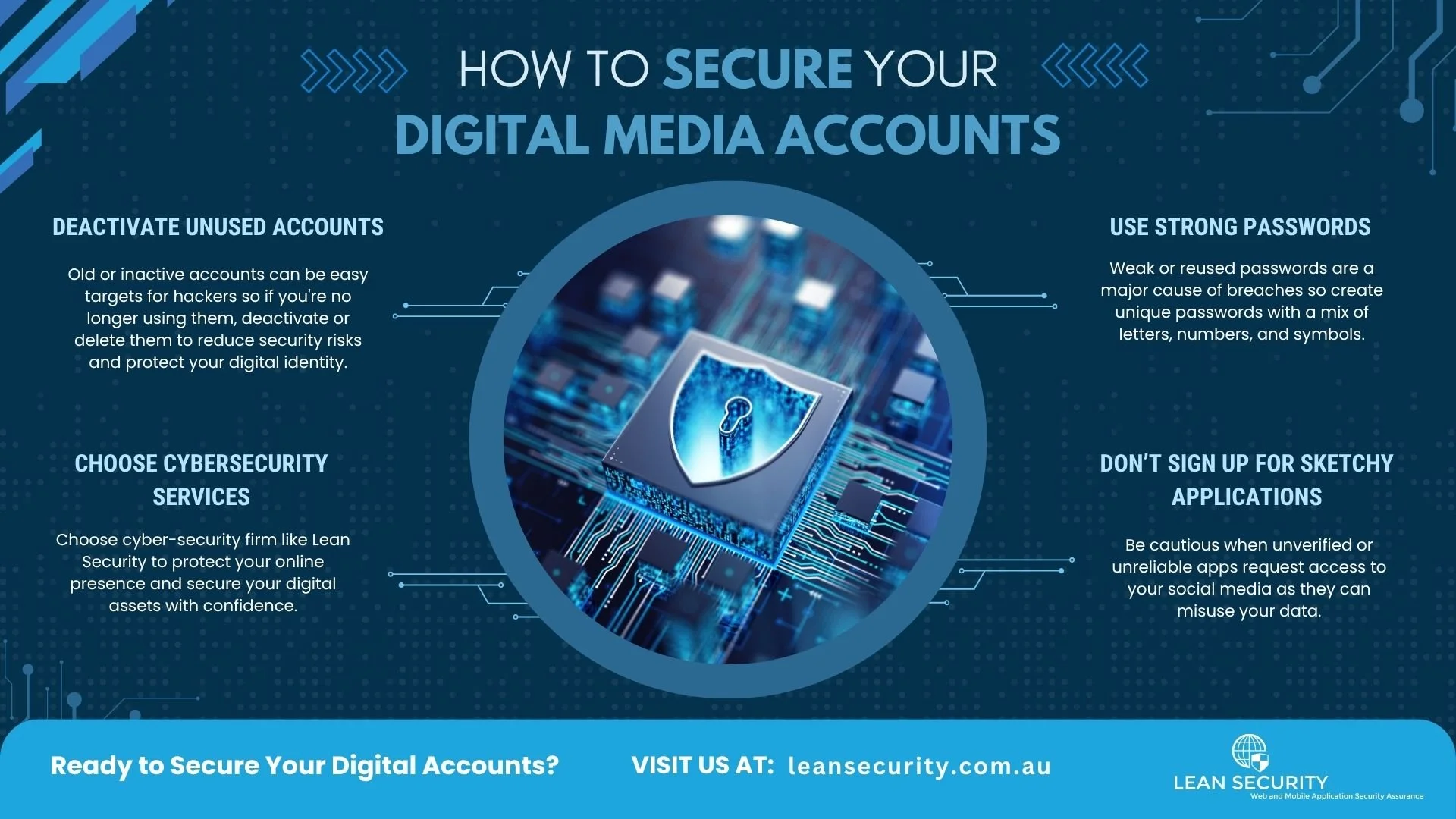
How To Secure Your Digital Media Accounts - Infograph
The following infograph shares how to secure your digital media accounts:
The following infograph shares how to secure your digital media accounts:

Ways You “Agreed” To Privacy Invasion Through Apps On Your Phone
Privacy of data is a big concern in the Information Age. Here is how you may be giving it away on your phone.
Our concerns about our data and privacy are becoming more and more serious as companies and educational, and healthcare facilities continue shifting online. Applications and software we love to use for 'free’ do not provide free services and use our data and information to their advantage. And this doesn’t happen entirely without our consent. As we continue to download all the applications that make our smartphones smarter, we inevitably share our valuable information like our contact lists, location and media files.
What Is Privacy Invasion?
Australian Law identifies some fundamental principles of online privacy. These principles include collecting data through non-intrusive means, non-disclosure of personal data to third parties, protecting the collected data from any theft, and destroying the data once it has been used. Any violation of these may lead to privacy invasion.
How Do Phone Applications Invade Privacy?
Phone applications usually ask for your permission before they can access your phone. Some of these conditions are expanded on under 'terms and conditions.’ Sometimes, permission is sought once the application has been downloaded.
For example, applications may ask you to allow access to your location, media files, microphone, etc. Most of the time, these applications and permissions are relevant, and much needed to function. For example, a cab service may need access to your location. However, some permission may be riskier.
According to research, some applications may go as far as accessing your phone’s motion sensors and even trick users into granting permission and access indirectly. This data can prove dangerous because it may be compiled and sold to third parties who may be hackers.
In such circumstances, each phone application is like spyware in its ways and may need security testing to ensure potentially dangerous third parties do not access your data.
What Can You Do To Overcome It?
The dangers of allowing unhindered access to your phone are apparent. Data is the most valuable currency in the current day, and allowing unlimited access to it may endanger your security and that of your business.
You can take the following steps to ensure safety:
Delete Old Applications
Ensure you delete any unwanted applications from your phone to prevent them from unnecessarily accessing your data.
Don’t Install More Applications Than You Need
All of your applications are lying there in your phone and transferring your data to marketers. Therefore, do not be tempted to install applications you don’t intend to use—you’re giving away your data for free!
Check Your Applications’ Permissions
Ensure you are familiar with how your applications share your data and how private they are about it. Make sure you change settings in your phone about data sharing that you don't like, and if you don't have that option with a specific app, beware of its potential threat.
Hire Professionals for Vulnerability Testing
Hire professionals to ensure your data’s safety. Lean Security is an IT solutions firm that offers security testing, penetration testing services, and mobile application security assessment. Let our professionals handle your online security for you.

The Minimalist Guide to Mobile Application Security: Why Less Can Be More
Ensuring mobile application security is a must and the “less is more” approach could be more beneficial in achieving this goal. You would think that adding more rules, security tools and safeguards is the best approach. When you take streamlined application design into consideration, you will see why less is more is the better tactic. Try designing mobile applications in a way that the amount of data permitted in device downloads or exposed in apps is minimized. This will help you reduce the risk of revealing sensitive information.
Mobile applications have become a great help to those who want to take advantage of the latest technology. However, using the latest technology also involves risks. The most common areas where there is threat in security for mobile applications include application provisioning, security monitoring and analysis, user authentication and device management.
Ensuring mobile application security is a must and the “less is more” approach could be more beneficial in achieving this goal. You would think that adding more rules, security tools and safeguards is the best approach. When you take streamlined application design into consideration, you will see why less is more is the better tactic. Try designing mobile applications in a way that the amount of data permitted in device downloads or exposed in apps is minimized. This will help you reduce the risk of revealing sensitive information.
You can also choose what information you will show in a mobile application. For example, you can create a few must have functions or screens instead of presenting large amounts of important data or developing a completely new consumer relationship management system. The best approach is to simplify the mobile app and improve its security and usability.
You can use color codes or icons to limit the information you reveal while expediting navigation. For example, your customers are classified into three levels. Instead of completely defining the full meaning of those levels, a simple color code can give the user a hint about what level a certain customer is in.
Showing a visual icon can deliver information faster in a mobile application. Streamlining the design can also help you display less sensitive information. For example, if an upcoming birthday is noted in the app, the app design could show a simple boxed present image instead of a text reminder.
It is also important to implement certain security measures. The mobile platform you are using should be equipped with built-in security features that can handle data encryption and allow you to set up authentication and passwords. Some mobile platforms allow applications to be setup so that business information automatically disappears. This feature is particularly beneficial if a device is stolen or lost. If you want to separate your personal information from your business data on your mobile device, there are device management tools that can help you do so. If your device gets stolen or lost, your business data will be deleted right away.
Improving the functionality and security of the mobile app is a must. You have the freedom to choose what you want to reveal in the app. Do not think that including a set of utilities will guarantee the security of your app. Try using graphical cues and set limits on what can be accessed or downloaded. By doing so, you will be able to develop a mobile app that is more user-friendly and streamlined and reduce security risks for your organization. Design a mobile app with security in mind and don’t forget to test it.