
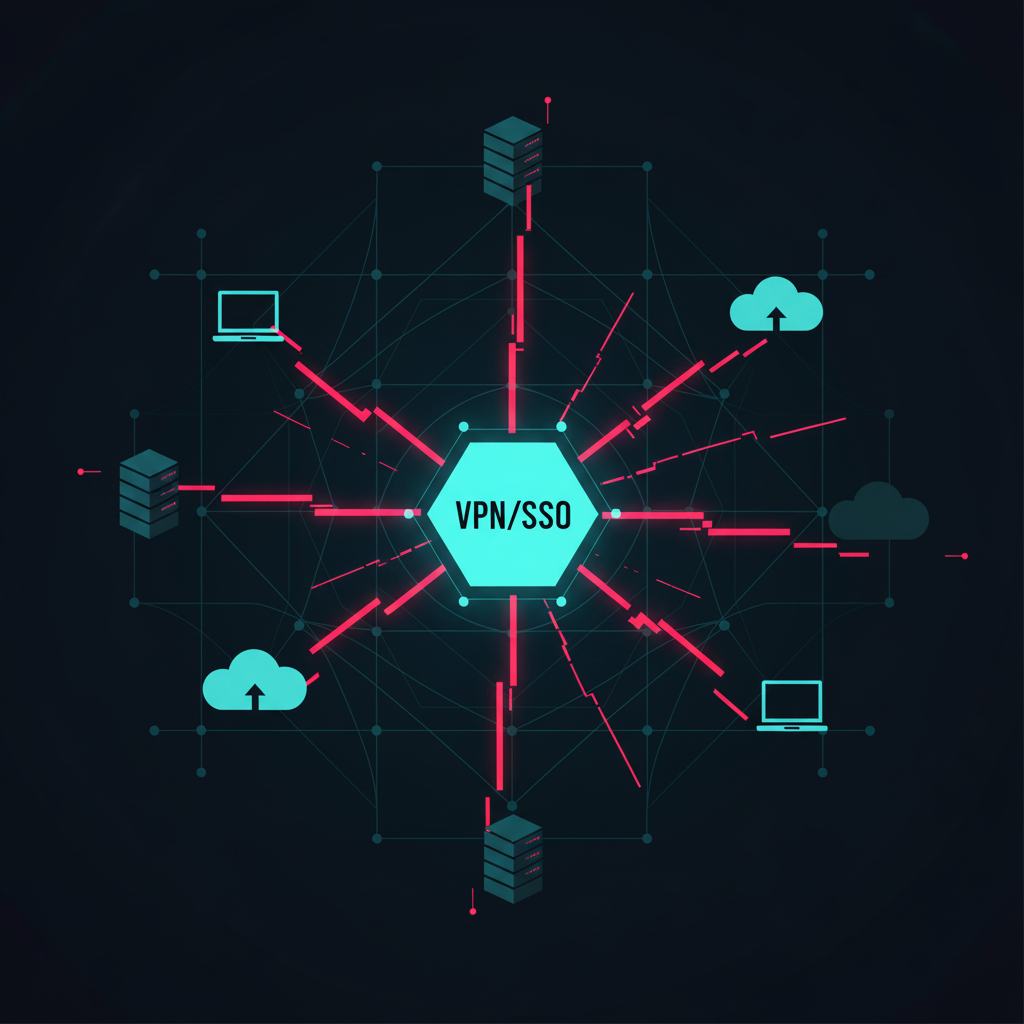



The Basics of Web Application Pen Testing
A penetration testing service provider can help you uncover vulnerabilities in your web application and prevent cyber-attacks. Read on to find out how it is performed.

A penetration test (aka a pen test) is a cyber-attack performed on your computer system in a simulated environment to check for possible vulnerabilities. In the world of web application security, a pen test is used to augment a web application firewall (WAF).
What Does A Penetration Test Do?
Penetration testing involves attempting to breach multiple application systems like the application protocol interfaces (APIs) and frontend/backend servers to find vulnerabilities in the system, like incomplete inputs that are an easy target for code injection attacks.
The resulting insights from a penetration test can be used to improve your WAF security policies and fix any detected weaknesses.
Stages of Penetration Testing:
A pen test is performed in five stages. These are:
Planning and reconnaissance:
In the first stage, the testing aims and goals are defined, along with the systems that will be tested and the testing methods to be used. We also try to gather the information to help us understand how a target works and its potential weaknesses.
Scanning:
The next step involves understanding how a target application will react against different attack attempts. This can be done with:
· Static analysis: Inspecting an application’s code to predict how it will behave while running, using tools to scan the entire code in one pass.
· Dynamic analysis: Inspecting how an application’s code behaves while running in real-time.
Gaining Access:
This is when the attack is performed using web application attacks like SQL injection and cross-site scripting to find the target website’s vulnerabilities.
These vulnerabilities are then exploited by stealing data, stopping traffic, and more, finding out the damage they cause.
Maintaining Access:
In this phase, exploitation is prolonged to understand if the vulnerability allows the attack to gain deeper access. This is done to mimic advanced persistent threats that often stay in a system for months in an attempt to steal a business’ sensitive data.
Analysis:
Lastly, the test results are organized into a report that expands on specific vulnerabilities exploited and the sensitive data that testers gained access to. It also details the amount of time the pen tester could stay in the system without being detected.
This information helps security personnel to reconfigure the organization’s WAF settings and other security solutions to fix any vulnerabilities and protect against possible future threats.
Methods of Penetration testing:
Penetration testing can be done either externally, internally, targeted, blind, or double-blind.
To understand more about the significance of penetration testing, contact Lean Security. Our AI-powered web application penetration testing service helps uncover potential risks to security by using advanced methods. You can book a pen test for your organization by calling us at +61 (2) 8078 6952.
Remember, with web security; it’s better to be safe now than sorry tomorrow.
Top 4 Threats Online Gamers Need to be Wary Of (infographics)
Here are the threats online gamers should be war of
Security Risk Assessment - Why Do You Need It
Read all about why you need security risk assessment
Security Challenges in Hybrid Cloud Environments
While hybrid cloud environments give greater control and scalability, it comes with a range of cybersecurity challenges.
The hybrid cloud gives reliability and control of the private cloud and scalability and speed of the public cloud. That’s why more and more businesses are turning toward it. According to a 2019 survey, 85% percent of organizations consider the hybrid cloud an ideal cloud mode.
According to IDC, 90% of the world's organizations will employ the hybrid cloud as their operating model. While the hybrid cloud is the most viable option, security challenges need to be considered to ensure a secure network.
1. Data Transfer
The hybrid cloud system uses infrastructure from two providers — private and public. They’re separated by public internet. Therefore, it poses a security threat, so it’s your responsibility to ensure that your data is safe when in transit.
We advise that you encrypt your traffic to overcome this challenge. Use the latest encryption ciphers and standards, but don’t forget to outline your requirements depending on your business needs. Cloud vendors do provide with client-side encryption and Transport Layer Security to ensure that your data stays safe.
2. Authorization and Authentication
Authorization and authentication are vital in every business, but they need undivided attention when you have a hybrid cloud system. It would be best if you evaluated how your data will be accessed from the public cloud. For that, you can use access and identity management tools to establish identity federation.
You can consider different single sign-on tools to consolidate the hybrid cloud access – especially if your hybrid cloud uses multiple on-premises and cloud accounts. You can choose public cloud management tools like Microsoft Azure Active Directory Seamless Single Sign-On, or AWS Single Sign-On.
3. Compliance Concerns
Hybrid clouds can lead to significant compliance challenges concerning data movement. These challenges include GDPR compliance and loyalty to data sovereignty laws. In highly regulated industries, like finance, government, and healthcare, even a small blunder can charge you with hefty fines and lawsuits.
To ensure that your hybrid cloud complies with the law, begin by evaluating the cloud environment. Look at the bigger picture of the cloud for cybersecurity. There shouldn’t be any room for errors. Therefore, be cognizant of the compliance considerations with every step to your take to build the hybrid cloud.
Looking for a Trusted Cybersecurity Company?
We are an online security services provider focusing on providing managed security services to clients in Gordon, NSW. Our services include web and mobile application penetration testing, API and IoT penetration testing, and web security audit. Contact us at+61-2-8078-6952 to learn more.
Exploitative Facial Recognition Devices
You may think that facial recognition is a smart technology, but it’s doing more harm than good.
The use of facial recognition devices has been increasing at an unprecedented rate. It’s used for surveillance everywhere, from malls to airports to law enforcement. While this technology comes with some upsides, its exploitative features cause concerns about its users' safety and privacy.
1. Data Privacy
The data received from the face recognition device contains numerous video and image files. It also includes the maps that are created with facial recognition systems.
All these files are stored on servers and companies can access them through a cloud. Like usual computer systems, this data, too, can be accessed by hackers.
Many smartphone applications and companies use this data for research. Consequently, they have a chance to garner profits out of it — without you knowing about it. These companies can also share or sell this data to other third parties who can track and recognize you.
Companies that develop face recognition apps must take data privacy into account. The best way to do this is to write a comprehensive privacy policy and get the customer’s consent.
2. Racial Bias
Facial recognition features display racial bias. Reports have shown that facial recognition devices fall short when identifying women and people of color.
Facial recognition devices need to be fed with diverse datasets to learn how they can identify a diverse group of people with different characteristics. Suppose tech companies want to perfect facial recognition systems. In that case, they must feed a diverse dataset of people belonging to other races, genders, and skin colors, and not just a particularly privileged group.
3. Low Reliability
According to a research study published by MIT, misidentification in facial recognition devices is rampant.
Currently, the factors like poor image and video quality and low illumination can throw off the system making it unable and unreliable to identify a person.
Moreover, if a person is standing at a slight angle, have worn glasses, or have gotten a haircut, the facial recognition device may fail to recognize. These limitations present severe flaws in the system.
4. Lack of Regulation
Currently, there’s no regulatory framework or legislation around facial recognition devices and data uses. The state of Illinois in the US passed legislation for biometric identification. Moreover, many cities across the world have banned the use of facial recognition by the government altogether.
Businesses that are adopting facial recognition must plan the risks to privacy and safety that may arise in the future. While it’s challenging, a robust cybersecurity infrastructure can ensure that it works well.
Lean Security is an online security services provider focusing on providing managed security services in Gordon, NSW. Our services include web and mobile application penetration testing, API and IoT penetration testing, and web security audit. Contact us at+61-2-8078-6952 in case to learn more.